Steel is one of the world’s most widely used alloys and is used in numerous industries, from construction to automotive manufacturing to industrial equipment. Among the various types of steel, mild steel holds a special place due to its unique properties. Mild steel is the most widely used carbon steel grade and combines high strength, good ductility, and affordable price.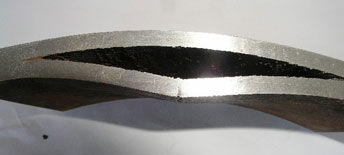
What is mild steel?
Low-carbon steel is steel with a carbon content of less than 0.25% . Therefore, it is less hard and strong than high-carbon steel, but more ductile and weldable .
Compared to high-carbon steel, low-carbon steel is easier to cut, machine, and form. These properties make it an economical and versatile raw material used in a wide variety of industries.
Chemical composition of stainless steel
Mild steel typically contains the following elements:
-
Carbon (C): less than 0.25%
-
Manganese (Mn): about 0.25–0.75%, used to improve mechanical properties.
-
Silicon (Si): about 0.1–0.3%, used to increase strength.
-
Sulfur and phosphorus: traces (impurities)
This combination places mild steel in the category of low-carbon steels .
Mechanical properties of stainless steel
-
Tensile strength (UTS): approx. 400–550 MPa
-
Elastic modulus (E): approx. 210 GPa
-
Hardness: relatively low (HB 120–180)
-
Density: approx. 7.85 g/cm3
-
Elongation: from 20% to 30%
These properties make mild steel ductile, weldable, and strong , although its corrosion resistance and hardness are lower than those of high-carbon steel.

Advantages of mild steel
-
Availability : Cheaper than many high-carbon alloys and steels.
-
Excellent weldability – due to the low carbon content.
-
High flexibility : easy to twist, bend and stretch.
-
Easy to use : Ideal for turning, cutting and drilling work.
-
Good strength – increased impact resistance.
Disadvantages of mild steel
-
Low corrosion resistance : rust, especially in humid environments.
-
Low hardness: Not suitable for applications requiring high wear resistance .
-
Lower strength than alloy or high carbon steel.
-
A protective coating is required , usually paint, galvanizing or an anti-corrosive coating.
Applications of low-carbon steel
Due to the above-mentioned properties, stainless steel is widely used in various industries:
1. Construction
-
Reinforcing steel production
-
Production of beams and corners
-
Metal structures and building constructions
2. Automotive industry
-
Body
-
Body parts
-
Car interior parts
3. Industrial equipment
-
Light ships under pressure
-
Pipes for transporting liquids
-
Light tools and machines
4. Furniture industry
-
Kitchen appliances
-
Metal furniture
-
Refrigerators, washing machines and other household appliances
5. Agriculture and road construction
-
light agricultural machinery
-
temporary buildings and accommodation
-
Bridges and light steel structures
low-carbon, heat-treated steel
Galvanized steel is not suitable for deep hardening due to its low carbon content , but can be hardened using the following methods:
-
Finishing to increase surface hardness
-
Nitriding to improve corrosion resistance
-
Styrofoam to improve plasticity and reduce internal stresses
Used to improve the performance of some applications.
The difference between mild steel and other steel grades
-
Compared to high carbon steel, low carbon steel has better ductility and weldability, but has lower strength.
-
Compared to stainless steel , mild steel is cheaper but less corrosion-resistant.
-
Compared to cast iron, mild steel is softer and more flexible, while cast iron is more brittle but more resistant to pressure.
Standards for low-carbon steel
There are several international standards for low-carbon steel:
-
ASTM A36: The world’s most widely used structural steel
-
EN 10025 (S235, S275) – European standard for low-carbon steel
-
JIS SS400 – Japanese standard for structural steel
-
IS 2062 – Indian Standard for Mild Steel
Numerical examples of the properties of hardened steel
Let’s assume that a mild steel bar with a diameter of 16 mm is subjected to a tensile force. Its cross-sectional area is:
A = πd24 = 3.14 × 1624 ≈ 201 square millimeters A = \frac{\pi d^2}{4} = \frac{3.14 \times 16^2}{4} \approx 201 \
If the breaking force is 90 kN:
σ=FA=90000201≈448 MPa\sigma = \frac{F}{A} = \frac{90000}{201} \approximately 448\, MPa
This value is within the typical tensile strength range of mild steel.
The future of mild steel in industry
Despite the development of more modern alloys, mild steel remains important due to its low cost and ease of production. In the future, corrosion-protective coatings, combination with light metals, and improved heat treatment processes will expand its application range.
Finally
Mild steel is one of the most widely used steels worldwide and is used in numerous industries, from construction and automotive to industrial equipment and household appliances. This is due to its low price, ductility, and high weldability.
Although this steel has low corrosion and wear resistance, its performance under various conditions can be improved through protective coatings and surface treatments. Therefore, mild steel remains one of the most important structural materials of our century.