Corrosion is one of the most serious problems across all industries. It can shorten the lifespan of equipment, increase maintenance costs, compromise system integrity, and even lead to the complete shutdown of production lines. Corrosion protection has therefore become a crucial issue in many sectors, including oil and gas, petrochemicals, power generation, shipbuilding, steel processing, food processing, and water and wastewater treatment.
In this context, the term “corrosion resistance” takes on particular significance. But what exactly is meant by corrosion resistance? Why are some materials corrosion-resistant, while others rust and decompose quickly? What factors influence a material’s corrosion resistance? And how can a material’s corrosion resistance be improved through technical processes?
This article provides a comprehensive scientific guide aimed at anyone who wants to understand the concept of corrosion resistance in a simple and practical way.
Definition of corrosion
To understand the concept of corrosion resistance, one must first understand corrosion itself.
Corrosion is a natural process in which materials (mostly metals) are destroyed by chemical or electrochemical reactions with their environment.
short:
-
Metals often return to their original (metallic) state.
-
This regressive phenomenon is similar to corrosion.
For example, iron reacts with oxygen and moisture to form iron oxide (rust) , a brittle and weak material.
Corrosion is not just oxidation ; there are other types as well, such as:
-
Regular erosion
-
Galvanic corrosion
-
Hole
-
Stress corrosion cracking (SCC)
-
Abrasive corrosion
-
microbial corrosion
What is meant by corrosion resistance?
Corrosion resistance refers to the ability of a material to withstand the harmful reactions of the environment under the following conditions :
-
Performance has declined.
-
Change attributes
-
Loss of appearance
-
This leads to a stagnation in productivity.
-
or structural damage
Yes.
In other words, a material with high corrosion resistance:
-
It is not prone to rust.
-
It is not susceptible to corrosion and rust.
-
Resistant to acids, salts, alkalis and moisture.
-
It doesn’t go bad over time.
-
Requires less maintenance
-
Longer life
Examples of materials with high corrosion resistance:
-
stainless steel
-
titanium
-
Nickel alloy
-
Technical polymers such as polytetrafluoroethylene
-
Oxidized aluminum
Why is corrosion resistance important?
Corrosion is one of the most costly industrial problems worldwide.
According to global statistics:
-
The losses caused by corrosion exceed $2.5 trillion per year.
-
Approximately 30% of industrial plants are directly damaged by corrosion.
-
Cracks caused by corrosion can lead to explosions, chemical leaks, or even plant shutdowns .
Therefore, improving corrosion resistance is of utmost importance, because:
-
Extension of the service life of equipment and structures
-
Reducing maintenance costs
-
Improvement of employee and environmental safety
-
Reduction of production downtime
-
Increased productivity and efficiency
And so it will be.
What factors influence corrosion resistance?
Corrosion resistance depends on several factors, the most important of which are:
1. The chemical composition of this substance.
The most important factor for corrosion resistance is the chemical composition of the metal or alloy.
For example:
-
Stainless steel 304 contains chromium and nickel, which form a passivation layer that provides corrosion resistance.
-
Ordinary carbon steel is prone to rust due to a lack of reinforcing elements.
-
When in contact with air, aluminum forms a protective oxide layer.
-
Titanium is one of the most corrosion-resistant materials.
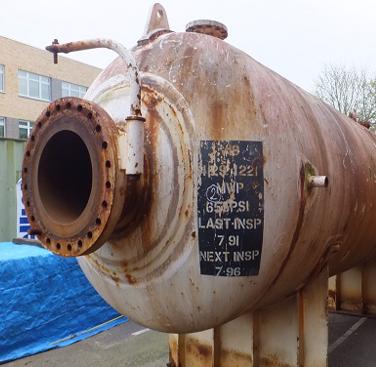
2. Type of environment
The type of environment can either increase or decrease corrosion.
Environmentally harmful:
-
Seawater (high salinity)
-
acidic environment
-
alkaline environment
-
High humidity
-
Chlorides (most important corrosive substances)
-
High temperature
The harsher the environment, the greater the resilience must be.
3. Temperature
High temperatures accelerate corrosion reactions.
For example, stainless steel is susceptible to intergranular corrosion at high temperatures.
4. Mechanical stress
Stresses caused by bending, tension or vibration can lead to stress cracking (SCC).
5. Painting and surface treatment
Smooth, carefully finished surfaces are more corrosion-resistant.
A suitable coating significantly improves corrosion resistance.
Types of corrosion and the role of corrosion resistance
To better understand the importance of corrosion resistance, we need to know the different types of corrosion.
1. Uniform corrosion
In this case, the metal surface deteriorates uniformly.
Its corrosion resistance can usually be improved by choosing a suitable alloy or coating.
2. Electrochemical corrosion
When two different metals are joined together, one serves as the anode and the other as the cathode. The anode metal corrodes quickly.
Solution:
-
Choose metals with similar electrical potentials.
-
Use of an insulating material between two metals
-
Use of sacrificial anodes
3. Enter the train station.
This is one of the most dangerous types of corrosion.
Even corrosion-resistant metals like steel can suffer from pitting corrosion when in contact with chlorides.
Solution:
-
Use 316 stainless steel instead of 304 stainless steel.
-
epoxy paint
-
Chloride control
4. Stress corrosion cracking (SCC)
The combined effect of mechanical stress and a corrosive environment can
lead to sudden failure.
5. Corrosion
When corrosion is accompanied by fluid flow, the rate of destruction increases significantly.
Solution:
-
Use more durable materials
-
Rational design of pipelines
6. Microbial corrosion (MIC)
Some bacteria produce acids or sulfides that can cause severe corrosion.
How can corrosion resistance be improved?
There are many ways to improve corrosion resistance:
1. Select the right materials
The most important decision.
Corrosion-resistant materials:
-
stainless steel
-
Aluminium and its alloys
-
titanium
-
Nickel alloy
-
Polymers and compounds
2. Color
The coating acts as a barrier between the metal and the environment.
Paint type:
-
Epoxy coatings
-
Polyurethane coating
-
hot-dip galvanized
-
nickel-plated
-
PVD coating
-
ceramic coating
3. Formation of a negative layer
Stainless steel and aluminum form a natural passive protective layer
that prevents the metal from coming into contact with the environment.
4. Cathodic protection
It is primarily used in the following industries:
-
pipeline
-
underground storage tanks
-
Ocean structure
-
He crosses
Types of cathodic corrosion protection:
-
sacrificial anode
-
Current application (ICCP)
5. Environmental control
Corrosion can be reduced by controlling environmental factors.
Example:
-
Reduce the humidity
-
Chlorine removal
-
The pH value decreases.
-
Fluid velocity control
6. Rational technical design
A properly designed system plays a crucial role in preventing corrosion.
Design tips:
-
Prevent water accumulation
-
remove sharp corners
-
uniform welding
-
Choose the right fish
How do you measure the corrosion resistance of a material?
Corrosion resistance was measured using the following methods :
1. Salt spray test
Test your tolerance to a high salt concentration.
2. Electrochemical test
Measurement of corrosion potential and current.
3. Rapid tests for detecting environmental influences
It simulates a real industrial environment.
4. Check the paint thickness.
Quality control of protective coatings .
Examples of materials with high corrosion resistance
1. Stainless steel 316
Suitable for chloride-containing environments.
2. Nickel alloys such as Inconel nickel alloys.
Resistant to acids and high temperatures .
3. Titanium
One of the most corrosion-resistant elements.
4. Oxidized aluminum
Robust and lightweight.
5. Polymers such as polytetrafluoroethylene
Non-reactive, suitable for use in the chemical industry.
Corrosion resistance in various industries
1. Crude oil and natural gas
Pipelines, storage tanks and drilling equipment.
2. Maritime industry
Ships, docks and platforms.
3. Water supply and wastewater disposal
Water pumps , pipes and storage tanks.
4. Food industry
Storage tanks and production lines.
5. Construction
Steel construction, reinforced concrete construction.
6. Cars
Body and engine parts.
In conclusion
Corrosion resistance is the ability of a material to withstand aggressive environments such as oxidation, pitting, cracking , and fracture . This resistance depends on various factors, including the material’s chemical composition, environmental conditions, coatings, temperature, and design.
Improved corrosion resistance can lead to the following:
-
Extending the lifespan of devices
-
Reducing maintenance costs
-
Improving system security and stability
-
Improving labor productivity in industry
Therefore, understanding corrosion and methods for improving the corrosion resistance of materials is crucial for all industries.