Introduction
Corrosion is one of the main challenges in various industries and represents a high cost to the global economy annually. To counter this phenomenon, the use of corrosion-resistant alloys, especially nickel-based alloys, has gained particular importance. Nickel, thanks to its unique properties, has a high corrosion resistance in various environments. In this article, we will discuss the role of nickel alloys in corrosion resistance, the types of these alloys, their resistance mechanisms, and their applications in various industries.
1. Corrosion and the importance of corrosion resistance
Corrosion is the process of decomposition of materials, usually metals, as a result of chemical or electrochemical reactions with the environment. This phenomenon may reduce the life of equipment, increase maintenance costs, and even lead to serious accidents. Therefore, it is necessary to use materials that are highly resistant to corrosion.
2. The role of nickel in corrosion resistance.
Nickel is a metal that has high corrosion resistance thanks to its electronic structure and ability to form protective oxide layers. When mixed with other elements, its anti-corrosion properties are enhanced. Among the most important reasons for the high resistance of nickel alloys:
-
Negative layer formation: Nickel can form a thin, adherent layer of oxide or hydroxide on the surface which prevents further metal contact with the corrosive environment.
-
Stability in acidic and alkaline environments: Nickel alloys show good resistance over a wide pH range.
-
Resistance to fossil corrosion and cracks : Some nickel alloys, such as Hastelloy, are very resistant to this type of corrosion.
 3. Types of nickel alloys and their corrosion resistance.
3.1. Nickel-chromium alloys (such as Inconel)
This group of alloys (such as Inconel 600 and Inconel 625) has excellent resistance to oxidation and corrosion at high temperatures thanks to the presence of chromium. These alloys are used in the aerospace, aerospace, power plant and refining industries.
3.2. Nickel-molybdenum alloys (as Hastelloy)
Alloys such as Hastelloy C-276 have exceptional corrosion resistance in acidic and chloride environments thanks to their high molybdenum content. These alloys are used in the chemical and marine industries.
3.3. Nickel-copper alloys (such as monil)
Monel 400 is a nickel-copper alloy, characterized by high resistance to seawater and alkaline environments. Used in marine equipment and desalination systems.
3.4. Super nickel alloy
These alloys (such as the Inconel 718) have high mechanical strength at high temperatures, as well as corrosion resistance, and are used in jet engines and gas turbines.
4. Corrosion resistance mechanisms in nickel alloys
4.1. Negative layer composition
As mentioned, nickel and chromium combine to form a protective layer that prevents the penetration of corrosive agents.
4.2. The effect of alloying elements
Elements such as molybdenum, copper and tungsten can increase resistance to localized corrosion (point corrosion and crack corrosion).
4.3. High temperature resistance
Some nickel alloys retain the protective oxide layer even at high temperatures and do not deteriorate.
5. Industrial applications of nickel alloys
-
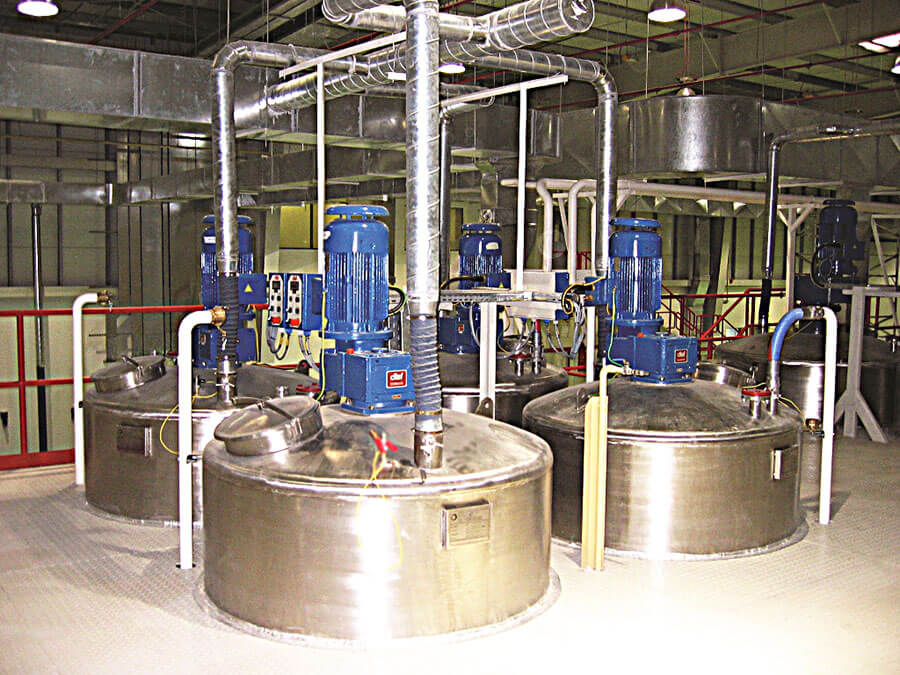
Chemical and petrochemical industries: for the construction of tanks, tubes and heat exchangers.
-
Marine industries: in the manufacture of ship propellers, valves and salt water systems.
-
Aerospace industries: in engine and turbine parts.
-
Food and pharmaceutical industries: due to their resistance to corrosion and lack of environmental pollution.
6. Conclusion
Nickel alloys play a pivotal role in improving corrosion resistance in various industries, thanks to their unique combination of chemical and mechanical properties. Thanks to recent advances in materials engineering, new nickel alloys with improved performance in corrosive environments continue to be developed. Investment in this area can reduce maintenance costs and extend the life of industrial equipment.
Resources (if needed)
-
Davis, Jr. (2000). Nickel, cobalt and their alloys. ASM International.
-
Repack, R. B. (2017). Corrosion properties in nickel-based alloys. Elsevier.
This article comprehensively examines the role of nickel alloys in corrosion resistance and can be used as a useful reference for materials engineers, industry professionals, and students.