Pressure vessels play a crucial role in all industries, from petrochemicals and oil refining to industrial plants and production facilities. These vessels are designed for storing gases or liquids under pressure, and any malfunction or improper handling can lead to serious accidents such as explosions or total system failure. Pressure vessel explosions can cause injuries, significant economic losses, environmental pollution , and production downtime. Therefore, it is essential to understand the causes of explosions, assess their risks, and implement the necessary preventative measures.
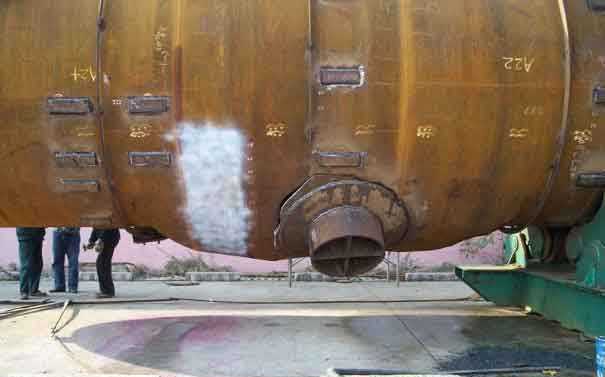
The main causes of pressure vessel explosions
1. Excessive internal pressure : This is the most common cause. Increased pressure can result from excessive fluid loss, high temperatures, or chemical reactions within the tank.
2. Metal stress and corrosion : Internal or external corrosion, stress corrosion cracking, and intermittent stresses can weaken tank walls and joints. Stress cracks can propagate suddenly, leading to explosive failure.
3. Design and installation defects : Welding defects, failure to comply with design standards , use of unsuitable materials or fittings, and improper flange installation can result in insufficient load-bearing capacity. 4. Mechanical damage and impact : Severe impacts to the structure, falling equipment, or strong vibrations can damage sensitive areas and lead to leaks or malfunctions. 5. Operator and human error : Operator negligence or failure to comply with safety regulations (e.g., failure to close safety valves, improper filling , or overheating) can potentially lead to an explosion . 6. Unintended chemical reactions : In tanks where chemically active substances are stored, unintended cooling or heating reactions can quickly lead to an increase in pressure or temperature.
Consequences and risks
Explosions of pressure vessels can have a wide range of direct and indirect consequences: pressure waves can cause building damage and injuries; debris can be hurled over long distances; secondary fires can break out in the presence of flammable materials; the release of toxic or environmentally hazardous substances is possible; and production losses can occur. The costs for remediation and compensation are often very high, and the company can also suffer legal and reputational damage.
Preventive measures and risk control
1. Design and Standards Compliance : The selection of materials, wall thicknesses, and safety factors should be based on national and international standards (e.g., ASME and EN) as well as process requirements. The design should include an analysis of pressure, temperature, fatigue, and failure scenarios. 2.
Installation and Quality Control: All welds, joints, and flanges should be inspected using non-destructive testing (NDT) methods such as ultrasonic testing, radiographic testing, or magnetic particle testing . A hydrostatic test should be performed before commissioning. 3. Regular Maintenance and Inspection : A schedule should be in place for visual inspections, corrosion testing, valve wall thickness checks, and instrumentation verification. Inspection logs help identify defects. 4. Active and Passive Safety Systems : Safety valves, pressure switches, reliable pressure gauges, and pressure relief systems (e.g., safety valves) should be installed. Emergency vents and safety valves must also be provided. 5. Process control and automation : Use modern control systems (DCS/PLC) for real-time monitoring of pressure and temperature and implement automated control procedures in case of deviations. 6. Safety training and culture: Train operators in loading and unloading, maintenance, and emergency procedures , and promote a culture of reporting incidents without penalty. 7. Corrosion protection : Use protective coatings, cathodic corrosion protection, control of fluid condition (e.g., by adding corrosion inhibitors), and water and contaminant management. 8. Environmental protection : Restrict access to hazardous areas, maintain safety distances between tanks and vulnerable buildings, and integrate protective barriers and fences into the plant design.

Emergency plan
An emergency plan is essential. This should include measures such as immediately notifying security personnel, shutting off power and electrical lines, safely evacuating staff, deploying appropriate firefighting equipment, and coordinating with local emergency services. Regular drills simulating explosions or leaks improve staff ability to respond appropriately in real emergencies.
Legal and insurance requirements
Many countries have specific legal requirements for the design, installation, and operation of pressure vessels, including technical certification, regular inspections, and data collection. Compliance with safety standards is crucial not only for human health and the environment but also for reducing financial risks and fulfilling insurance requirements.
In conclusion
Explosions of pressure vessels can be prevented through careful design, regular inspections, proper maintenance, the use of robust control systems, and continuous employee training. Comprehensive risk management, from design review to emergency response, is crucial to minimizing the likelihood of explosions and their consequences. Investments in safety are more than just necessary expenditures; they also safeguard the well-being of people, finances, and the environment, thus ensuring the long-term sustainability and productivity of the plant.